
IMO 13: Treatment Revolution
Moffitt Cancer Center under the auspices of the Center for Evolutionary Therapy has been developing evolutionary therapies with the goal to control cancer rather than eradicate it. There has also been efforts to develop multistrike (or extinction therapies) that leverge the evolution informed combation and sequencing of drugs. Both of these efforts have led to clinical trials across a range of cancers. Developing innovative treatment strategies means thinking outside of the box and potentially doing things that might seem on the surface counterintutive but can actually have a positive impact on the long term. The theme of this workshop is treatment revolution which is all about taking risks, and going against the status quo to come up with the most innovative approaches to treating cancer. Potential theme that teams might tackle are: (i) Exploiting the potential role of treatment breaks? (ii) Integrating microenvironment modulating therapies? (iii) Using sparse and discrete data to facilitate treatment decisions? (iv) How best to exploit immunotherapy in combination with other drugs? (v) How can we model disease when quantifiable burden exists?
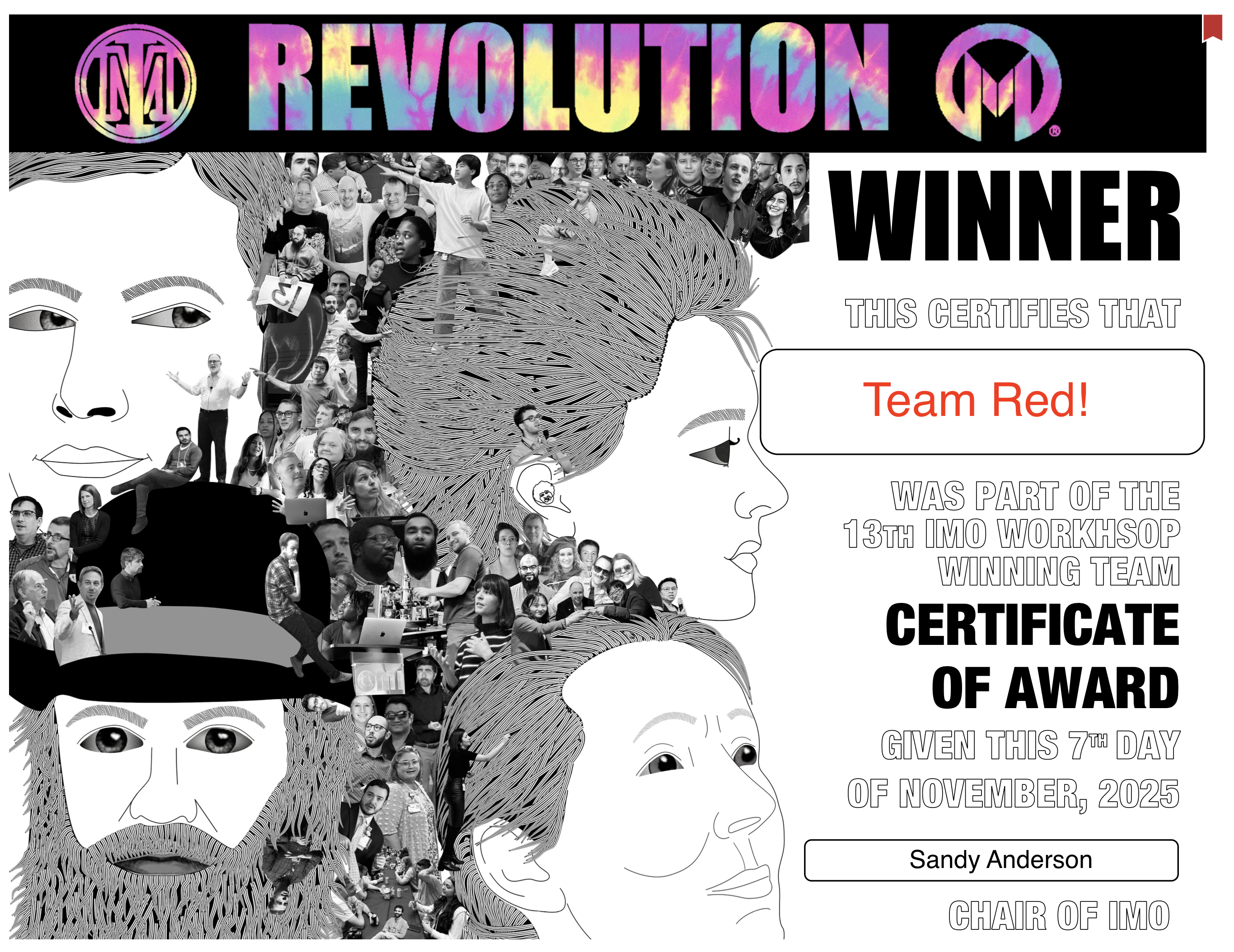
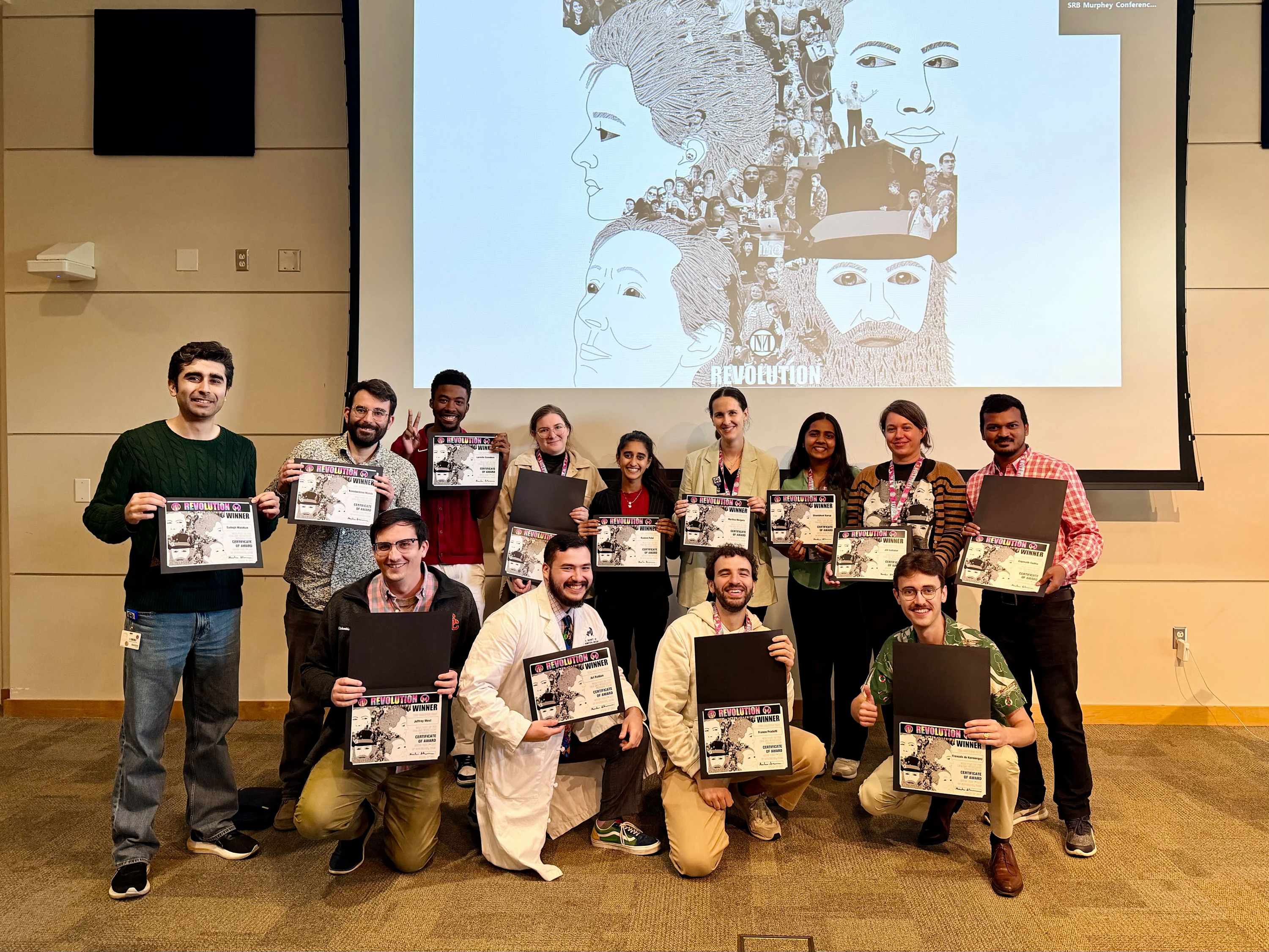
And the winner is...
Team Red!
The winning team receives a $50,000 pilot award, generously sponsored by the Moffitt Cancer Center.
Winning Presentation

Click to download the winning team's final presentation.
Winning team: specific aims
AI-assisted rapid mathematical model development for restoration ecology-guided CAR-T therapy
Click to download a pdf of the winning team's specific aims.
Chimeric antigen receptor T-cell (CAR-T) therapy has led to improved outcomes for patients with relapsed or refractory B-cell lymphoma (B-ALL). Before CAR-T infusion, patients undergo lymphodepletion to reduce lymphocyte load, preparing a favorable environmental niche for CAR-T expansion. Potential harmful environmental factors include dysregulated inflammation and influence of the gut microbiome. Revolution: This proposal represents a revolution in CAR-T therapy by implementing principles from restoration ecology, and iterative mathematical model generation through AI models trained on scientific literature. We hypothesize that the immune microenvironment critically influences the persistence and efficacy of CAR-T cells. Experimental evidence suggests that different lymphodepletion regimens (Flu/Cy, Clad/Cy) are associated with myeloid cell accumulation and induce resistance by driving the generation of a myeloid-driven immunosuppressive environment. Specifically, we hypothesize that targeting myeloid suppression and myelopoiesis represents a promising avenue for prophylactic intervention to improve CAR-T therapy. Principles from restoration ecology can guide immune environment manipulation before CAR-T infusion. Traditionally, ecosystem restoration efforts restore degraded environments through: 1) biotic intervention (promoting fitness of a species during introduction), and 2) abiotic intervention (promoting a favorable environment) to restore ecosystem function and resilience. CAR-T cell engineering maximizes biotic intervention efficacy by optimizing the CAR-T product, but neglects the additional abiotic (environmental) intervention targeting myeloid suppression. If we manipulate/modify the environmental dynamics during lymphodepletion, immune function and therapeutic efficacy will be enhanced. Hematopoesis is a complex, hierarchical structure, which mathematical models can help to better understand how to target myeloid suppression and thus improve CAR-T efficacy. Mathematical models will be integrated with a clinical dataset (Aim 1), and functional data from experimental models (Aim 2). To assist modeling from development to testing, we will employ an AI-assistant framework (Aim 3) to create a natural dialog with the scientific and mathematical knowledgebase and accelerate mathematical modeling.
Aim 1:
Assess the potential of a restoration ecology framework to modify the pre/post infusion environment of patients treated with CAR-T. Rationale: Emergency hematopoiesis is a rapid response to stress conditions and is associated with a myeloid bias and increased neutrophils and monocytes. Using a cohort of patients treated with CAR-T therapy at Moffitt Cancer Center (N=408, pre/post CAR-T), we will quantify and model myelopoiesis inhibition as a strategy to improve restoration of immune function. 1a. Quantify immune cell kinetics in B-ALL samples across lymphodepletion regimens (Flu/Cy, Clad/Cy). 1b. Develop hierarchical hematopoiesis math model accounting for myeloid suppression after lymphodepletion. 1c. Assess the combinatorial effect of abiotic and biotic interventions for ecological restoration before CAR-T.
Aim 2:
Determine the effect of lymphodepletion on the generation of an immunosuppressive non-favorable environment prior to CAR-T cell infusion. Rationale: Lymphodepletion is associated with stress-induced myelopoiesis and linked to immunosuppression. We hypothesize that dampening emergency myelopoiesis promotes the generation of a favorable environment for CAR-T function. We will define the effect of lymphodepletion on myelopoiesis and myeloid suppression in a mouse model. We will investigate targets to inhibit myeloid suppression and augment a favorable immune environment by using multi-parametric flow cytometry to characterize immune subpopulations in peripheral blood. We will generate monocyte-derived macrophages in vitro to determine the immunosuppressive potential of monocytes before/after CAR-T therapy. 2a. Test the efficacy of IL-1 blockade (FDA-approved antagonist, Anakinra) and IL-1 receptor genetic deletion. 2b. Characterize the phenotype and function of immune cells in pre/post- CAR-T therapy patient samples. 2c. Develop a continuum mathematical model to quantify the macrophage effect of lymphodepletion agents.
Aim 3:
Investigate the potential of Retrieval-Augmented Generation to accelerate mathematical model development of CAR-T therapy. Rationale: The rapid proliferation of scientific literature has outpaced the ability of any scientist to maintain awareness of all relevant publications. To leverage the full extent of published scientific knowledge, we implement an Artificial Intelligence-based framework grounded in the scientific literature (>1,000 papers with keywords relevant to lymphodepletion and CAR-T expansion/persistence) and with access to scientific search engines (PubMed, Google Scholar, Scopus). Retrieval-Augmented Generation (RAG) is a novel approach to reduce false/inaccurate information and hallucinations by first retrieving information from an external data source before generating the final answer. 3a. Develop an AI-research assistant for querying literature and generating code from published models. 3b. Develop an AI-Mathematical Oncologist to iterate mathematical models with novel components using RAG. 3c. Validate our RAG approach via benchmarking of mathematical, clinical, and biological colleagues.
And the runner up is...
Team Purple!
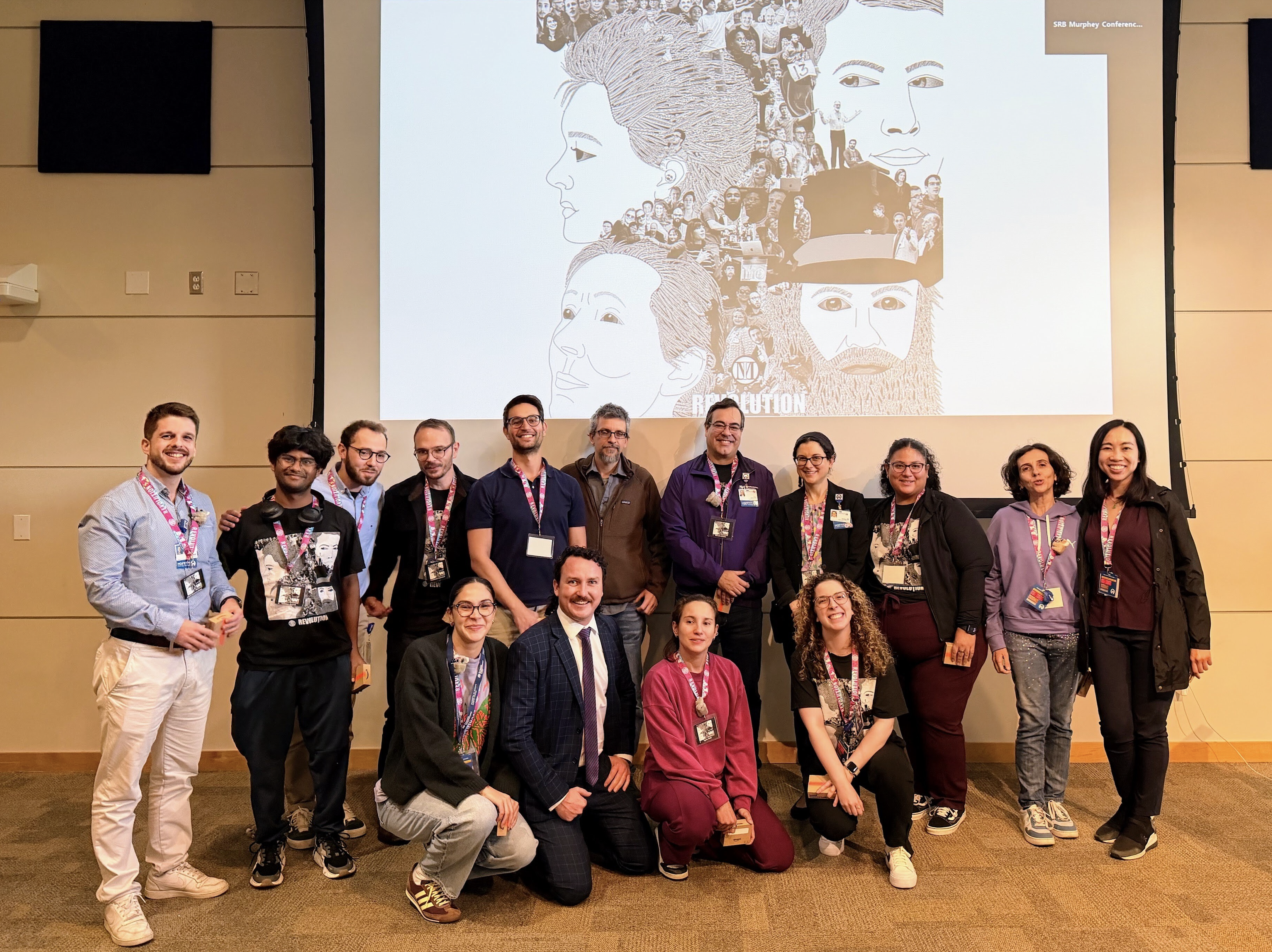

The runner-up team also receives a $50,000 pilot award, generously sponsored by the Center for Evolutionary Therapy.